
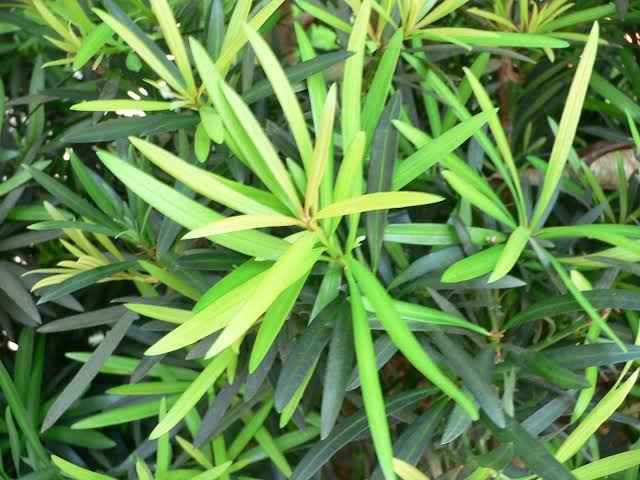
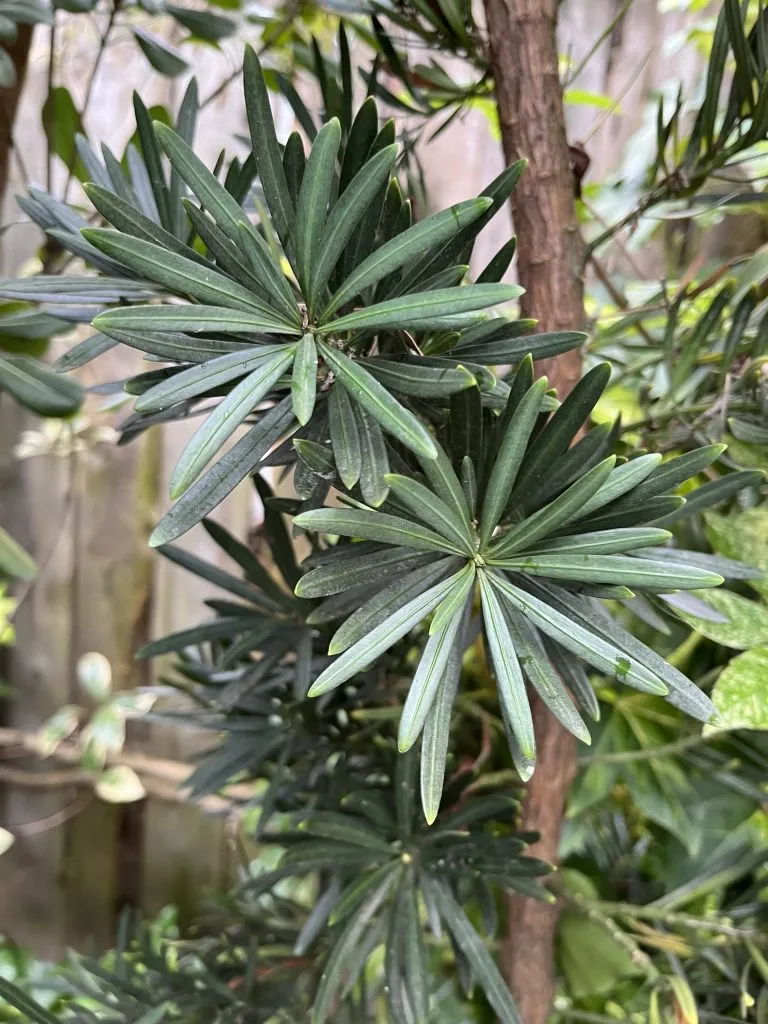
Visitor-Friendly Facts: This is a slow-growing, evergreen tree with soft, dark green needles that give it a dense, tidy appearance. It is often used to create formal hedges or sculpted topiaries because it responds very well to pruning.2 In many Asian cultures, it is considered a symbol of good fortune and is frequently planted near temples and homes.
Provenance of its name
"Maki" comes from the Japanese name for this tree, Kusamaki (クサマキ) or Inumaki (犬槇). The variety name maki was applied to this smaller, compact cultivar, which is why it is botanically known as Podocarpus macrophyllus var. Maki.4 The name "Buddhist Pine" comes from the tree's distinctive seed structure—its green seeds sit atop a swollen, red, berry-like stalk, together resembling a Buddhist monk wearing a red cloak, which is also why its Chinese name is Luóhàn Sōng (羅漢松), meaning "Arhat Pine."
Why the Plant is Important:
For Nature: Its dense foliage provides excellent shelter and nesting sites for small birds and insects. For People: It is a popular ornamental plant for landscaping and is also used in traditional medicine in some cultures. For the City: As a hardy and adaptable shrub, it is ideal for urban landscaping, helping to improve air quality and reduce noise pollution.